
Standard I/O cabling
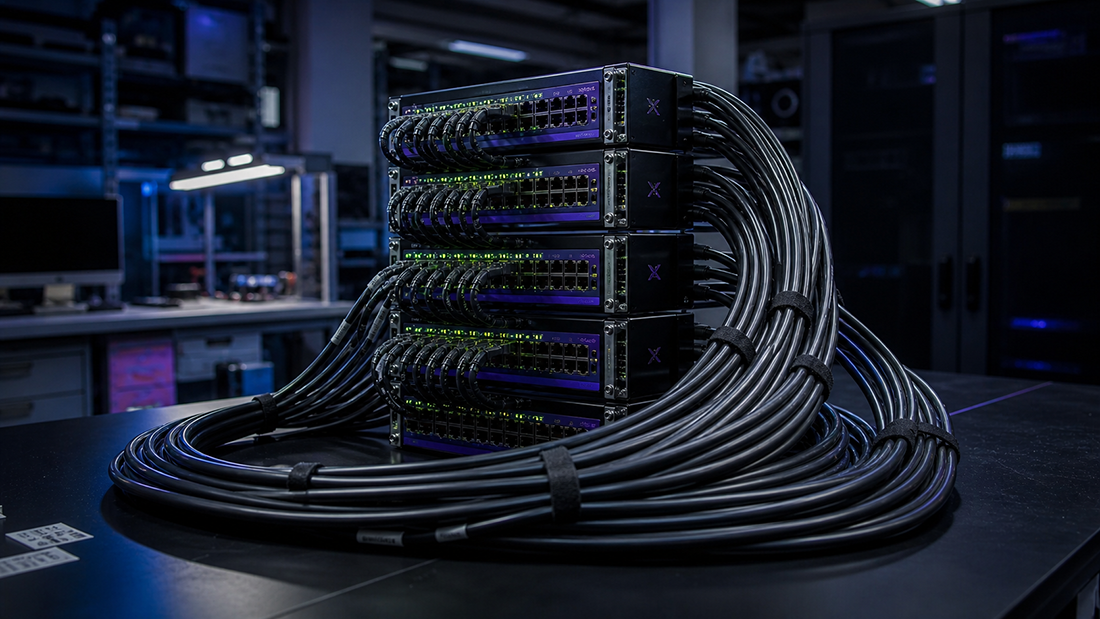
I/O cabling is used to ensure stable and reliable transmission of data and signals between different systems, devices and networks. Through established interfaces and connector standards, often in combination with customised solutions, secure and efficient connections are created for industrial applications.
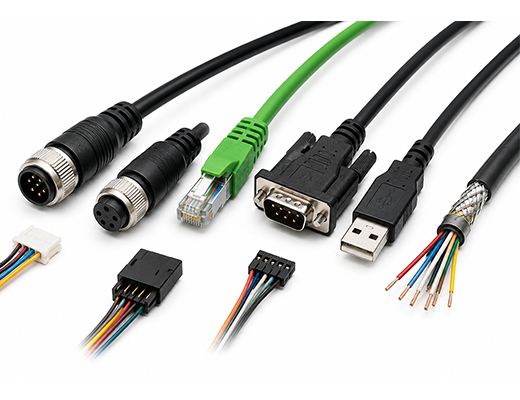
Reliable communication between systems
I/O cabling acts as the link between different parts of a system - from control systems and sensors to servers and network equipment. Using established connector and interface standards combined with customised solutions ensures compatibility, easy installation and stable performance over time.
Adapted for different environments
The cables are available in several versions and are suitable for office environments, industrial applications and data centres. They are designed to minimise interference and ensure high signal integrity even in continuous operation.
Advantages of I/O cabling
- Stable data & signal transmission
- Support for established standards
- Plug-and-play installation
- Wide range of designs
- Reliable performance
FAQ - Frequently asked questions and answers
What is I/O cabling?
- Cables used to connect devices and transmit data, signals or power.
Which standards are supported?
- It depends on the type of cabling, but common ones are Ethernet, USB, serial interfaces, etc.
Are these cables suitable for industry?
- Yes, there are robust variants adapted for industrial environments.
Do you need to customise I/O cabling?
- Standard solutions are often sufficient, but customisations can be made if necessary.